
The Rebuilders Method
A Method Built for People Whose
Marriage Is Ending
— Not Being Saved.
Most relationship education focuses on preserving marriages. The Rebuilders Method equips professionals to help people recover after a relationship has already ended.
CE credit eligibility pending.
The Core Idea
Most relationship education
assumes the marriage will be saved.
This one doesn't.
The books, workshops, and training programs that shape how professionals help couples are built on a single assumption: that both people want to stay. Communication tools, attachment repair, conflict de-escalation — all of it presumes reconciliation is on the table.
For a growing number of clients, it isn't. The decision has been made, or it has been made for them, and the work in front of them is no longer how to save what was — it is how to walk through what is ending and become someone whole on the other side of it.
The Rebuilders Method is post-relationship recovery. It gives the professional a structured, humane path through the terrain that begins where couples counseling ends.
The RIFT Method
Most professionals were trained to repair relationships. RIFT is a structure for the people whose relationship is ending.
When a client is grieving a marriage rather than trying to save one, the familiar moves stop working. Reframing, repairing, holding the relationship together — each of those quietly undermines someone who is leaving or being left. What replaces them is usually improvisation: sit with the feelings, give it time, see how next week goes.
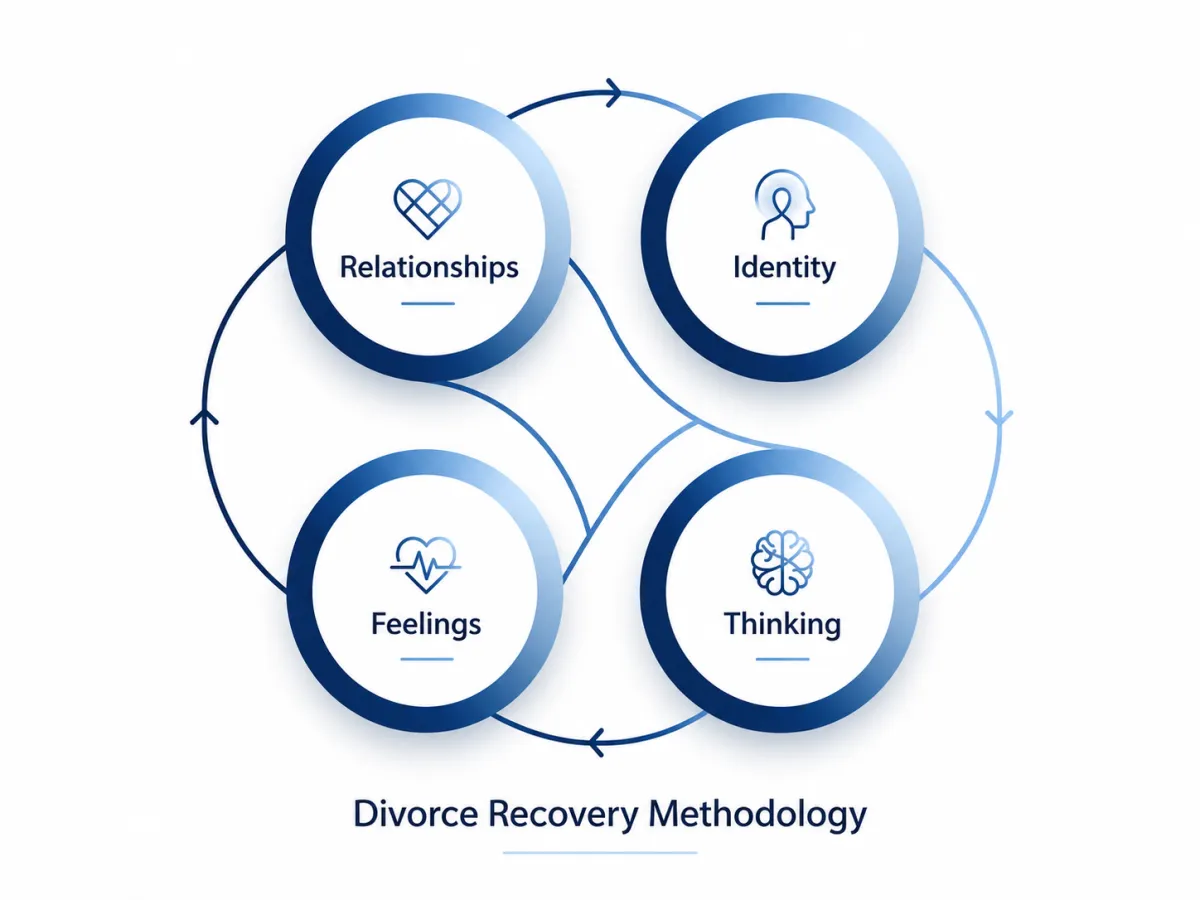
RIFT is the structure that replaces the improvisation. Four phases, in a defined order, each with its own work and its own way of going wrong.
Where it comes from
Dr. Bruce Fisher spent more than forty years developing the Rebuilding methodology, working with divorcing people and refining what actually moved them forward. His book has sold in the millions, and the ten-week program built on it has been run in communities worldwide.
Fisher's original system runs to roughly nineteen building blocks. That depth is a strength in a structured program and a barrier everywhere else — a clinician cannot hold nineteen steps in mind during a session, and a client in crisis cannot locate themselves on a nineteen-point map.
RIFT organises the same territory into four phases. Rebuilders International developed it as a teaching framework; the underlying method is Fisher's.
Why the letters are in that order
RIFT is also what opens when a relationship comes apart, and the letters run in the order the damage happens.
| As it falls apart | What happens |
|---|---|
| Relationships | The relationship tears |
| Identity | Who they are is called into question |
| Feelings | Grief and anger surge |
| Thinking | Thoughts become consuming |
Recovery runs the other way. You start where the person actually is — stuck in their head — and work back out toward connection.
Thinking, then Feelings, then Identity, then Relationships. Every person, every time.
That ordering matters clinically. A client pushed toward dating before their grief is processed will bring the grief into the next relationship. A client asked to rebuild their identity while their mind is still consumed by the former partner has no attention available for the work. The sequence is not a preference; it is what the earlier phases make possible.
The four phases
1. Thinking
Disentangling from the former partner
The mind stays occupied long after the relationship ends. Clients loop on the same questions — why did this happen, what could I have done differently, what was my role. They ask them in session, they ask them at three in the morning, and answering them changes nothing, because a new answer just restarts the loop.
These are unanswerable questions, and naming them as such is itself the intervention. It moves a person from spinning to noticing they are spinning.
Your head can't heal your heart.
Thinking clearly is necessary and it is not sufficient. A client who has reasoned their way to a tidy account of the marriage still has the grief waiting underneath. The work of this phase is to free up enough attention to do the next phase, not to resolve the loss by understanding it.
2. Feelings
Processing grief and anger
Grief and anger belong to one phase because they are two expressions of the same loss.
The distinction that matters here is between feeling and processing. A client who cries every day is not necessarily moving through anything. Picture grief as a full cup: daily crying spills over the sides, which brings momentary relief, but the cup stays full. Relief comes from deliberately emptying it, which takes structured work rather than time.
Anger goes in one of two directions. Some clients turn it outward — conflict, blame, damage to the former partner's reputation. Others turn it inward as self-blame, guilt and isolation. Many are troubled by the anger itself, because they do not want to be an angry person. Normalising it as part of grief rather than a character failing is usually the thing that lets it move.
You wouldn't tell someone with a broken leg to walk it off.
Emotional injury is real injury, and it needs care rather than encouragement to move on. Most clients have heard "you'll get over it" from everyone around them before they get to you.
3. Identity
Building the next version of a self
Clients arrive wanting to get back to who they were. That person was shaped by the relationship and is not available to return to — which lands hard, and is the honest starting point of this phase.
The work is designing the next version rather than recovering a previous one. It usually involves an inner voice doing the undermining. Externalising that voice — giving it a name, the Doubter or the Judge — makes it something the client can answer rather than something they simply are.
This phase runs longer than the others, because it involves patterns formed across a lifetime rather than in one marriage. A ten-week program does not complete it. It starts it, and the shifts compound afterward.
4. Relationships
Rebuilding trust and connection
Frequently mistaken for dating. It is broader and it starts earlier: divorce damages trust across every relationship a person has — family, friends, colleagues, their own children. Naming that reduces the pressure considerably for clients who assume this phase means getting back out there.
When dating does come up, one question separates desire from readiness: am I looking for a partner, or am I trying to avoid being alone? Wanting a relationship is not evidence of being ready for one.
Roughly four in five clients show some pattern of codependency. The work here includes practical alternatives — boundaries, and the ability to state a need directly: I feel, I need, I'm asking.
What this gives you in session
- A location. You can tell where a client is rather than inferring it, and they can tell too. Most clients find it a relief to learn their state has a name and a position in a sequence.
- A reason to wait. The framework tells you what not to do yet, which is harder to judge without one.
- Language that normalises. Anger as a phase rather than a flaw. Grief as injury rather than weakness. Clients engage differently once the thing they are ashamed of turns out to be a stage.
- A measure. The Fisher Divorce Adjustment Scale reports across the same four phases, so a client's position can be measured rather than estimated, and re-measured to show movement.
When you take the time it takes, it takes less time.
Time alone does not heal this. Left to itself it scabs over. The method exists because the work has to be deliberate, and the sequence exists because doing it in the wrong order costs people years.
How it is measured
Each phase corresponds to subscales on the Fisher Divorce Adjustment Scale, a 100-item assessment developed in 1976 and validated independently in several countries.
| RIFT phase | FDAS subscale |
|---|---|
| Thinking | Disentanglement from the love relationship |
| Feelings | Symptoms of grief; feelings of anger |
| Identity | Feelings of self-worth; social self-worth |
| Relationships | Rebuilding social trust |
Full detail on both instruments is on the assessments. Term by term definitions are on definitions.
Learn the method. Free.
An hour of training in the RIFT framework, the book and audiobook, and website hosting for life. Licensed professionals also earn CE credit.
Start the free training No cost. CE credit eligibility pending.About Rebuilders International
Rebuilders International trains mental health professionals and divorce coaches in the Rebuilding method, developed by Dr. Bruce Fisher over more than forty years. Individuals going through divorce can find programs, classes and a free self-assessment at rebuilders.net.
The Framework
RIFT — the four domains of rebuilding a life.
The Rebuilders Method organizes divorce recovery into four connected dimensions. Each area influences the others, creating a complete picture of personal recovery.
R
Relationships
Healthy recovery begins by understanding past relationship patterns while building healthier future connections. Participants explore communication, trust, boundaries, forgiveness, and healthy attachment.
I
Identity
Divorce often changes how people see themselves. Recovery includes rebuilding confidence, rediscovering purpose, and developing a renewed sense of identity beyond the marriage.
F
Feelings
Grief, anger, guilt, loneliness, fear, and uncertainty are natural experiences during divorce. Participants learn practical ways to process emotions rather than becoming controlled by them.
T
Thinking
Recovery depends on perspective. Participants learn to identify destructive thinking patterns and replace them with healthier beliefs that support resilience and long-term growth.

Lineage
Built on more than 40 years of rebuilding methodology.
The Rebuilders Method is built on the Rebuilding methodology developed by Dr. Bruce Fisher, whose work has guided hundreds of thousands of people through divorce recovery since the late 1970s.
We stand on that foundation. The RIFT™ framework — Relationships, Identity, Feelings, Thinking — is developed and owned by Rebuilders, and it is how we translate four decades of clinical practice into training a professional can use on Monday morning.
Grounded in the Rebuilding tradition
Refined for contemporary professional practice
Designed for therapists, clergy, coaches, and facilitators
The Book
The Written Foundation
The principles behind the Rebuilders Method are grounded in decades of divorce recovery work.
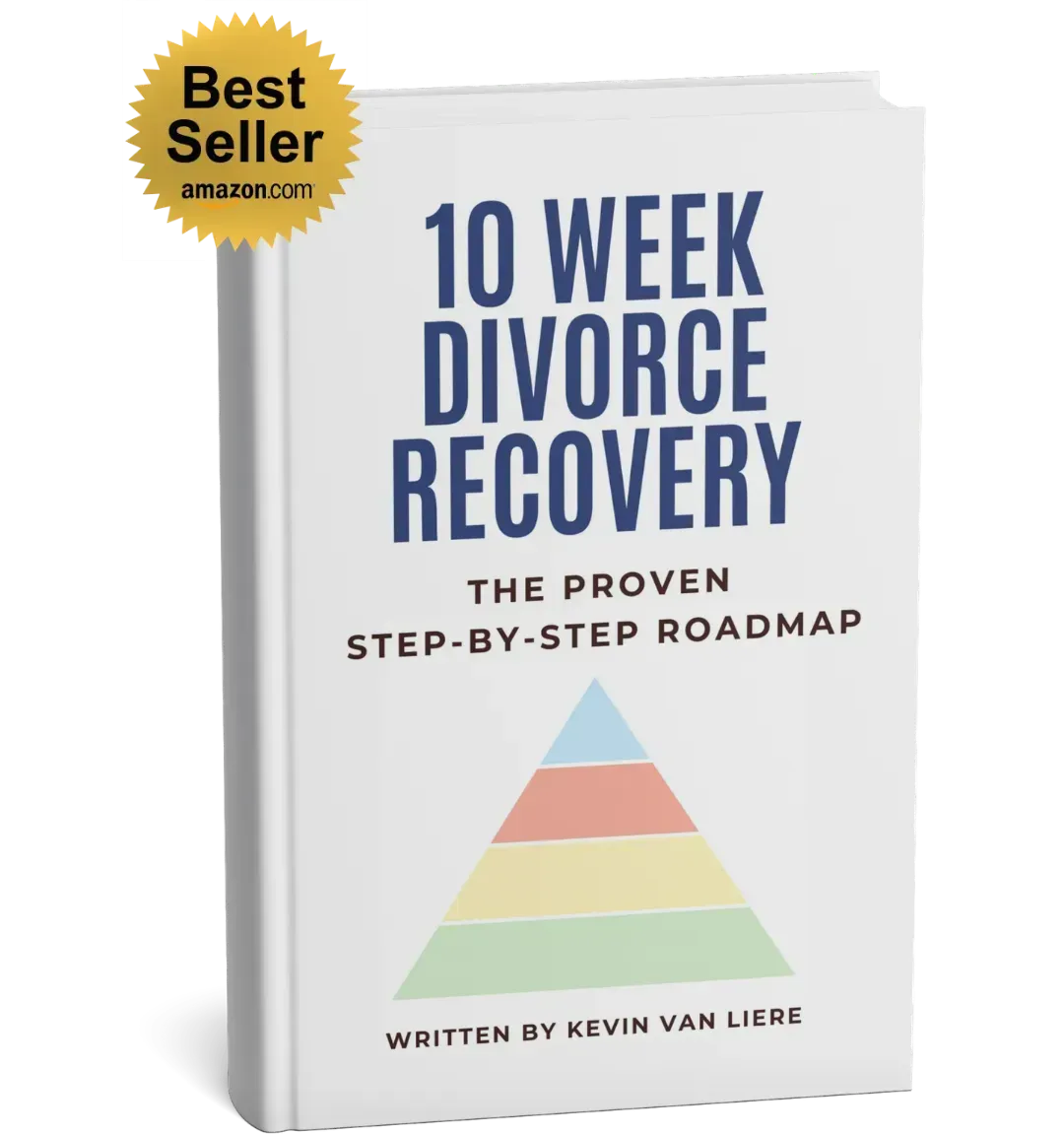
This book introduces the foundational concepts that continue to guide professionals helping clients rebuild after divorce. It serves as the bedrock upon which our modern frameworks and professional trainings are built.
Learn the Full Method
Discover how the Rebuilders Method equips professionals with a practical framework for helping people recover after divorce.
CE credit eligibility pending.
Rebuilders International
Empowering professionals to guide individuals through transformative recovery and rebuilding processes.
For Professionals
Looking for the consumer program? Visit Rebuilders.net.
© 2026 Rebuilders International. All rights reserved. | Privacy Policy | Terms | [email protected]